Financial Statements
The University of Michigan expanded its Go Blue Guarantee by offering free tuition to eligible in-state undergraduate students from families with annual incomes up to $125,000 on the Ann Arbor, Dearborn, and Flint campuses in fall 2025. This expansion benefits an additional 2,200 students and increases the total number of U-M students receiving full-tuition support to more than 10,000 since the program began. U-M’s continued investment in financial aid reaffirms its commitment to affordability and equal opportunity, ensuring that more in-state students, regardless of economic background, can access a world-class education at Michigan.

The University of Michigan’s Arts Initiative named Rhiannon Giddens—MacArthur Fellow, Grammy winner and Pulitzer co-composer—as its inaugural U-M Artist-in-Residence through October 2025. Giddens engaged with campus archives, faculty and students, advancing research on the contributions of American underclasses to music and leading creative workshops, master classes and public events. Her residency launched U-M’s Creators on Campus program, fostering interdisciplinary collaboration and enriching campus life. The initiative emphasizes the transformative power of the arts and U-M’s commitment to supporting innovative artists and integrating artistry into education and community engagement.

Savannah Sutherland captured the NCAA 400-meter hurdles title, setting program, NCAA, championship and Canadian records with a personal best of 52.46 seconds—becoming only the second NCAA runner to break 53 seconds. Her win led Michigan to tie for 26th place at the championships. Sutherland’s victory marked her second national title and capped a standout career with three consecutive top-two NCAA finishes.
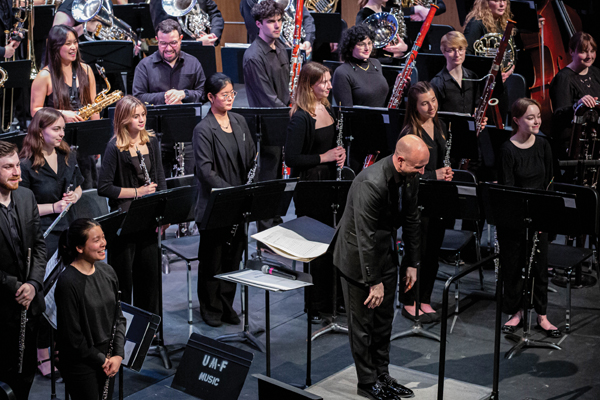
The U-M Symphony Band revived its statewide tour tradition with its 2025 State of the Arts: Symphony Band Tour, visiting 11 Michigan communities from May 6-12, 2025. Led by director Jason K. Fettig, 58 student musicians presented world-class performances and interactive clinics, engaging and inspiring regional high school students. Concerts featured works by renowned and Michigan-based composers, showcasing diverse musical styles. This initiative—supported by U-M Arts Initiative and campus partners—highlights U-M’s commitment to artistic outreach and community engagement, bringing the transformative power of live music to audiences and students across the state.
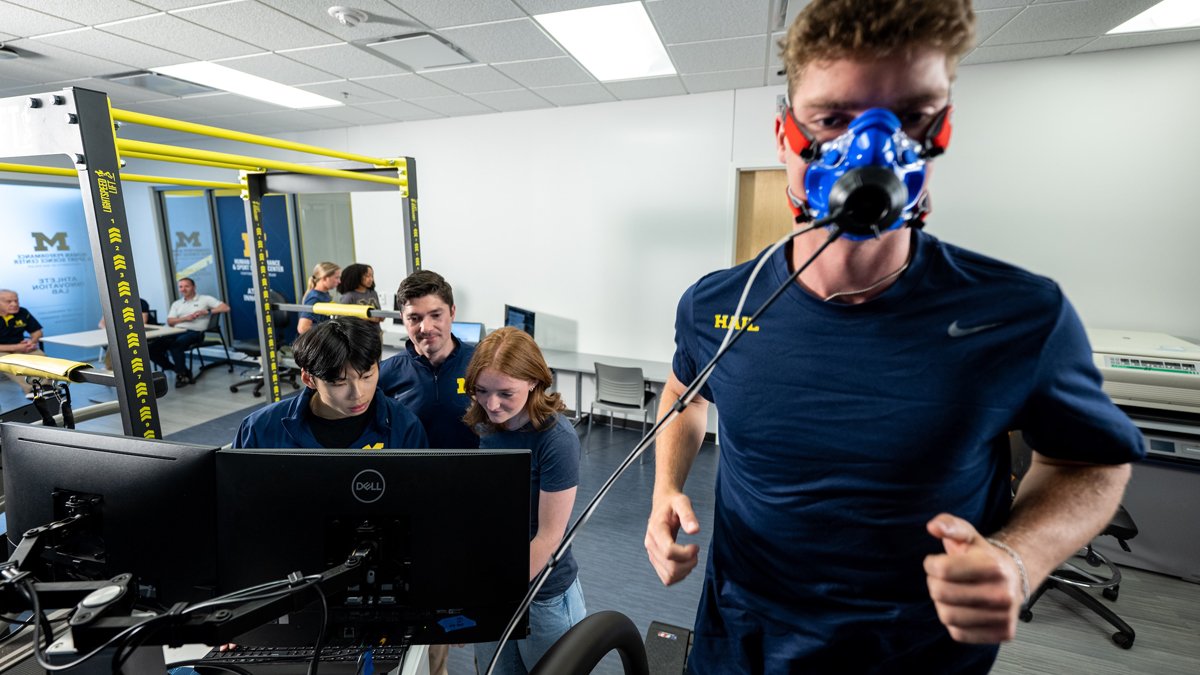
The University of Michigan has joined the Global Sport University Network Leadership Council, partnering with nine leading universities worldwide to advance sport science research in health, inclusivity, innovation and sustainability. U-M’s participation highlights its international leadership in sport and physical activity through programs like the Human Performance & Sport Science Center and the Adaptive Sports & Fitness Program. This partnership will expand global research collaborations, student opportunities and interdisciplinary innovation—supporting U-M’s Look to Michigan vision to improve health and well-being for Michiganders and beyond and further strengthening the university’s position in the global sport science community.
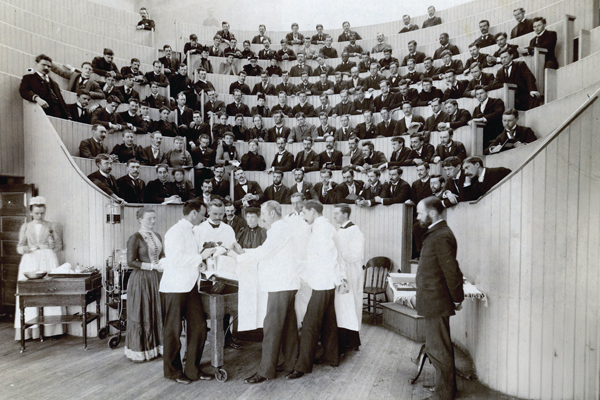
Michigan Medicine celebrated the Medical School’s 175th anniversary with a yearlong series of events, exhibits and reflections on its legacy and future throughout FY 2025. The observances highlighted the school’s growth from its founding in 1850 to its current status as a leading center of biomedical education, research and clinical care. Activities included historical exhibits, apparel sales supporting innovation and the opening of the D. Dan and Betty Kahn Health Care Pavilion. The celebrations also addressed ethical reflections on past medical practices, encouraging learning from history to inspire future achievements and promote public good in Michigan and beyond.
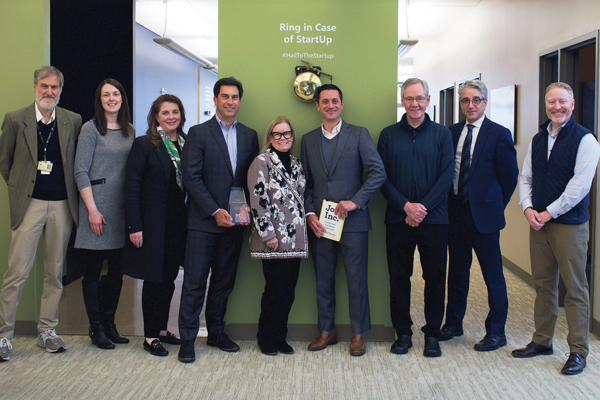
During FY 2025 the University of Michigan set records for research commercialization, with 673 invention reports, 326 license and option agreements and 31 startups launched. Among these, U-M startup HistoSonics announced a landmark $2.25 billion acquisition, advancing its innovative FDA-cleared histotripsy therapy for liver tumors. These successes, supported by Innovation Partnerships, demonstrate U-M’s leadership in turning research discoveries into real-world impact through industry collaboration, startup launch and capital investment. Collectively, U-M innovations expanded opportunities for patients, solved societal challenges and strengthened Michigan’s reputation as a leading center for research-driven entrepreneurship.
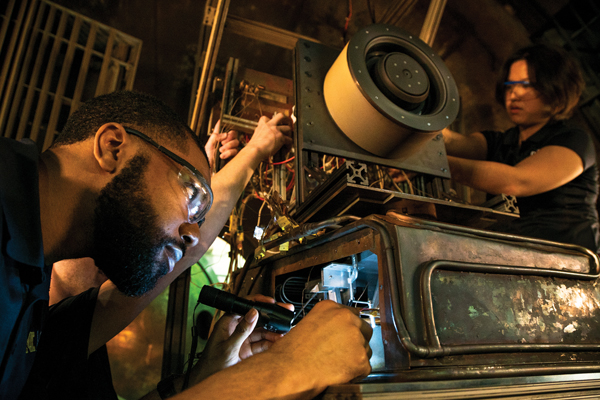
Michigan Engineering is leading the Space Power and Propulsion for Agility, Responsiveness and Resilience Institute, funded with $35 million by the U.S. Space Force. The institute brings together eight universities and 14 industry partners to develop spacecraft propulsion systems that combine fast chemical rockets with efficient electric propulsion powered by a nuclear microreactor. U-M teams from Aerospace Engineering, Chemical Engineering, Mechanical Engineering, Electrical Engineering and Computer Science, Climate and Space Sciences and Engineering, and Nuclear Engineering and Radiological Sciences are collaborating. This effort aims to advance versatile propulsion technologies for national defense and space exploration.
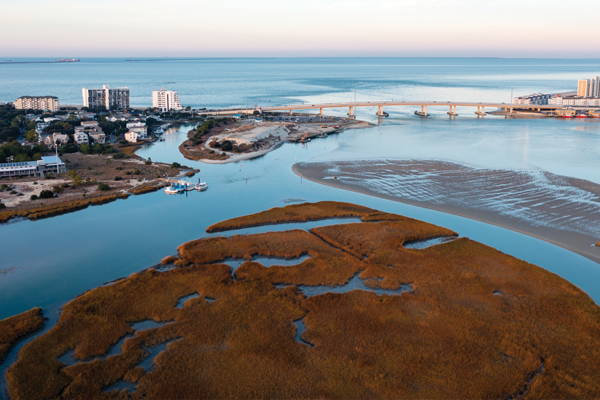
The University of Michigan’s Graham Sustainability Institute received a $25 million grant from the National Oceanic and Atmospheric Administration (NOAA) to continue leading the National Estuarine Research Reserve System Science Collaborative. Over five years, U-M will support research addressing critical environmental challenges in U.S. coastal communities, focusing on climate change impacts, community resilience, habitat adaptability and watershed dynamics. The collaborative funds projects that unite coastal managers and scientists to create innovative solutions and enhance estuarine and coastal resilience. U-M’s continued leadership highlights the university’s commitment to advancing sustainability research, engaging diverse partners and supporting the stewardship of important coastal ecosystems nationwide.
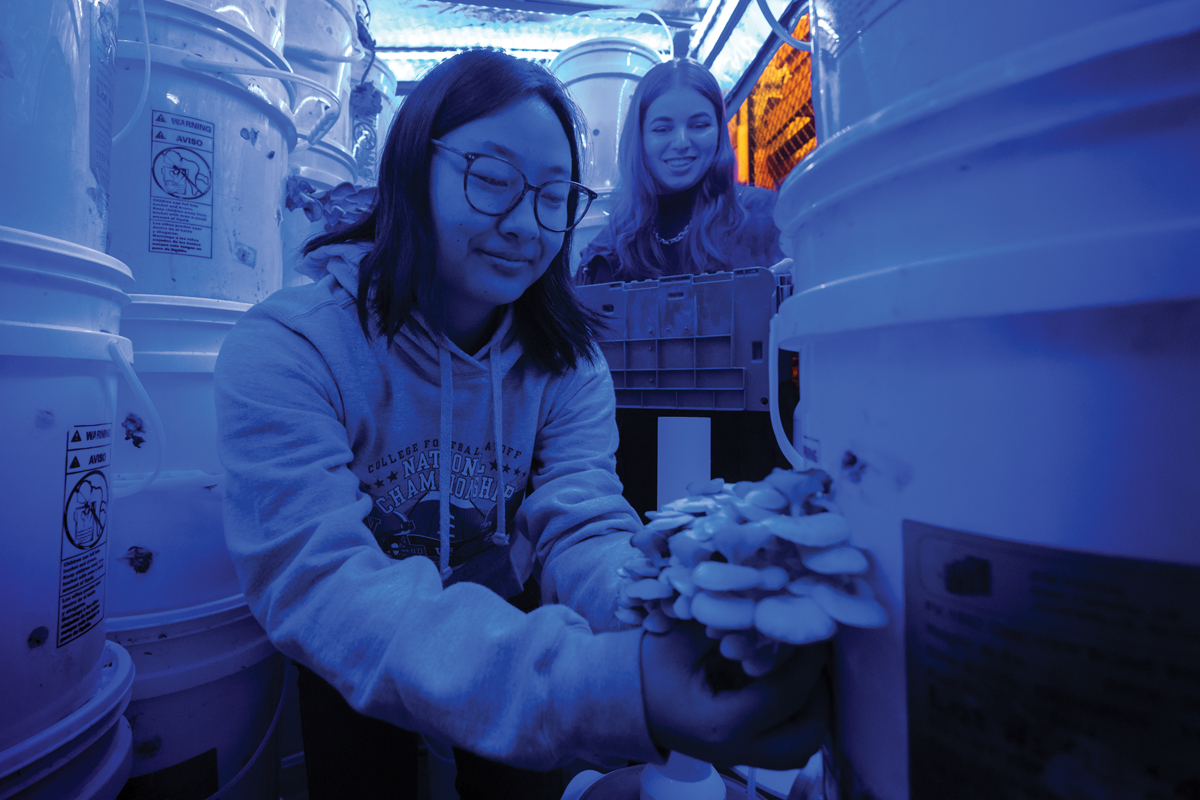
The Michigan Sustainability Community, expanding from the pilot Sustainable Living Experience, is a new living-learning program open to undergraduate students from all University of Michigan schools and colleges. Launched in fall 2025, program students live in Oxford Houses and participate in sustainability-focused coursework, hands-on projects and social events. Administered by the College of Literature, Science, and the Arts with support from Student Life, Michigan Housing, the Office of the Provost, the Office of the Executive Vice President and Chief Financial Officer and the School for Environment and Sustainability, the program fosters collaboration and experiential education. It serves as a gateway to sustainability opportunities and prepares students to become future sustainability leaders.
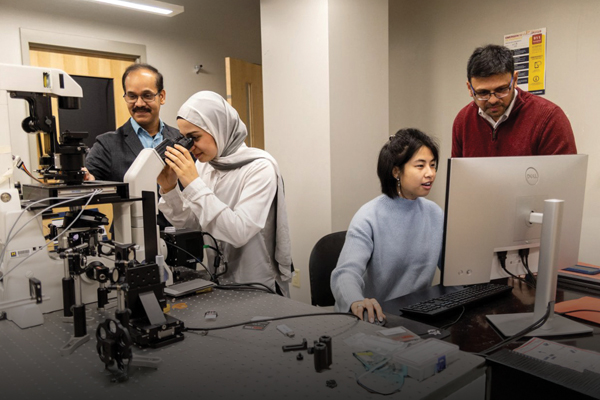
The University of Michigan-Dearborn earned a prestigious “Research 2” designation from the Carnegie Foundation for the Advancement of Teaching and the American Council on Education, recognizing major growth in research spending and doctorate production. UM-Dearborn became one of only five Michigan schools to achieve this status, following a more than 100% increase in research expenditures since 2022. The university’s research focuses on mobility, advanced manufacturing, cybersecurity, energy, artificial intelligence and biomedicine. Supported by federal grants, faculty and students collaborate on innovative projects that address urgent community and economic needs while preparing students for high-demand careers.
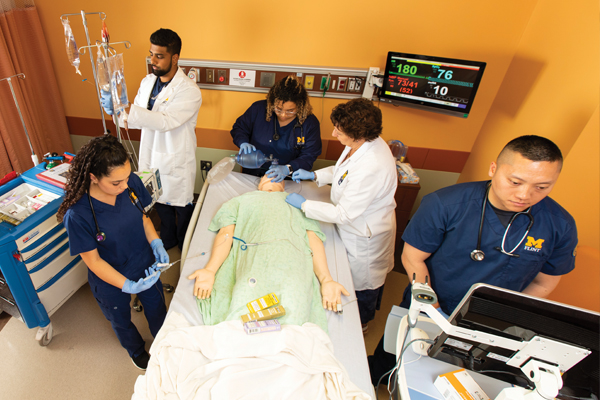
The University of Michigan-Flint School of Nursing launched the UM-Flint Educates Rural Nurses program with a $3.94 million federal grant from the Health Resources and Services Administration to address critical nursing shortages in Michigan’s Thumb region. This four-year initiative aims to increase nurse enrollment and graduation rates, provide specialized training, offer an accelerated pathway to nursing degrees and establish dedicated clinical faculty and preceptors in rural health care settings. Using simulation-based education and clinical immersions, the program prepares students from Huron, Lapeer, Sanilac and Tuscola counties for immediate employment, improving health care access in rural and underserved communities through regional partnerships.