
Maize Rays initiative powers campuswide solar expansion
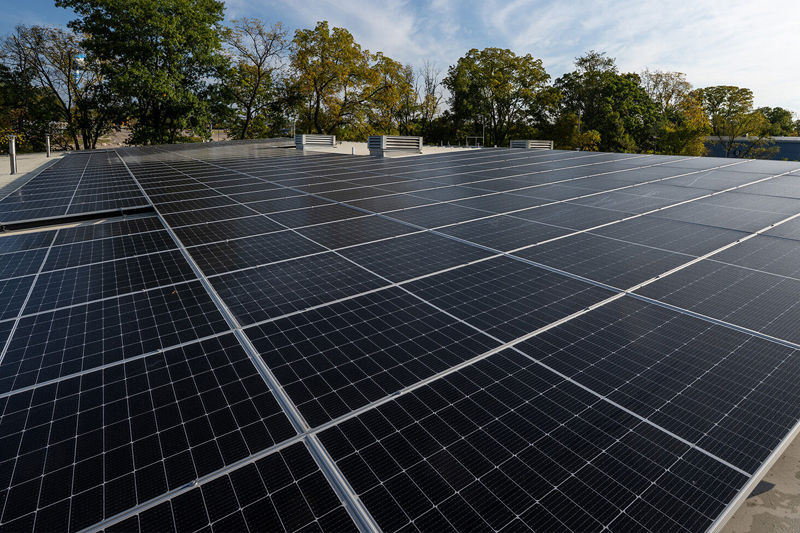
The University of Michigan has launched the Maize Rays solar expansion initiative which will install 25 megawatts of solar energy capacity across the Ann Arbor, Dearborn and Flint campuses over the next three years. This ambitious project marks a major milestone in U-M’s commitment to sustainability, energy resilience and climate action.
The electricity generated will feed directly into university buildings rather than the regional power grid, helping U-M eliminate greenhouse gas emissions from purchased electricity, also known as Scope 2 emissions, by 2027. These new solar installations — located atop parking structures and large rooftops to minimize disruption — will eventually provide enough renewable power for the annual usage of around 3,000 homes. By the end of calendar 2025, Ann Arbor will have more than 10 megawatts online with Flint and Dearborn following in later phases.
Maize Rays incorporates an on-campus solar initiative and off-site agreements to boost Michigan-based renewables. The project supports the energy resilience and climate goals of Ann Arbor and ties into the university’s broader Campus Plan 2050 and Look to Michigan initiatives, which focus on sustainability and environmental justice. Leaders such as Shana Weber, associate vice president for campus sustainability, and Kim Kiernan, vice president for facilities and operations, underscored the importance of visibility, community engagement and long-term impact during the May 2025 unveiling event on North Campus.
Collaboration is central to Maize Rays, involving the Office of Campus Sustainability, Facilities & Operations, Radial Power, student groups such as Students for Clean Energy and EcoData and other partners. The initiative is designed to inspire and educate the campus community, deepen research opportunities and make U-M a living learning lab for climate action that benefits the university and its surrounding communities.